

Sustainability · 2025
In this section51 topics
- Sustainability Policy3 items
- Sustainability Goals & UN SDGs3 items
- Policy Review3 items
- Business Value Chain1 item
- Stakeholder Analysis2 items
- Environmental Policy & Guidelines5 items
- Environmental Policy Review3 items
- Energy — Plan & Guidelines2 items
- Energy — Electricity Consumption1 item
- Energy — Fuel Consumption1 item
- Energy — Targets3 items
- Energy — Performance & Outcomes2 items
- Water — Plan & Guidelines2 items
- Water — Withdrawal, Discharge & Consumption1 item
- Water — Targets3 items
- Water — Performance & Outcomes2 items
- Waste — Plan & Guidelines2 items
- Waste — Generation, Disposal & Recycling1 item
- Waste — Targets3 items
- Waste — Performance & Outcomes2 items
- GHG — Plan & Guidelines2 items
- GHG — Emissions1 item
- GHG — Emissions Verification3 items
- GHG — Principles & Standards1 item
- GHG — Targets2 items
- GHG Targets — Other Targets1 item
- GHG — Performance & Outcomes2 items
- Environmental Legal Incidents1 item
- Other Environmental Management1 item
- Social Policy & Guidelines4 items
- Social Policy Review3 items
- Social — Principles & Standards Practised1 item
- Human Rights Due Diligence2 items
- Employees — Plan & Guidelines3 items
- Employees — Workforce1 item
- Employees — Remuneration & Provident Fund1 item
- Employees — Training & Development1 item
- Employees — Occupational Health & Safety1 item
- Employees — Labour Relations1 item
- Employees — Employee Representation2 items
- Employees — Targets2 items
- Employees — Performance & Outcomes2 items
- Customers — Plan & Guidelines3 items
- Customers — Satisfaction Results1 item
- Customers — Targets2 items
- Customers — Performance & Outcomes2 items
- Community & Social — Plan & Guidelines3 items
- Community & Social — Targets2 items
- Community & Social — Performance & Outcomes2 items
- Other Social Management1 item
- Law Violation Incidents1 item
Sustainability Policy
Has a Sustainability Policy
Yes
Policy Description
The company is committed to conducting business for sustainable growth by supporting the United Nations' Sustainable Development Goals (SDGs). This is achieved by operating business according to sustainable development principles that consider comprehensive impacts across environmental (E), social (S), and governance (G) dimensions. The focus is on reducing environmental impact, creating shared value for society, and operating under good governance principles and corporate governance to generate maximum benefits for stakeholders throughout the supply chain.
The Board of Directors has established a sustainable development policy, which is regularly reviewed to align with the organization's vision and mission to create a safe society and life by delivering safety and health products or services, both at work and in daily life. Furthermore, short-term and long-term goals have been set, along with strategies that consider impacts on the environment, society, and communities. These have been established as appropriate operational guidelines and integrated into the organization's operational processes to achieve sustainability goals. The company has considered significant changing factors and comprehensive impacts, such as climate change, operations based on human rights principles, and compliance with relevant laws, with appropriate oversight and monitoring by the Board of Directors. Additionally, preparations are made to address potential future crises and opportunities, focusing on developing personnel capabilities and skills, employee welfare, and leveraging technology to develop and improve work processes to respond to customer needs more quickly than expected. It also aims to build confidence in product and service quality, professionalism, and expertise in sourcing products and services, which will enhance competitiveness and foster sustainable growth for the organization.
The Board of Directors has resolved to approve the appointment of the Risk Management and Sustainability Oversight Committee. This is a sub-committee with the crucial duty of overseeing the organization's risk management and sustainable development, supporting the organization's development and growth in line with established goals. Furthermore, a charter has been established, clearly defining the scope of duties for the Risk Management and Sustainability Oversight Committee to ensure that policies, strategies, and operations related to risk management and sustainable development are overseen to align with the organization's goals, vision, and mission. In addition, a Risk and Sustainability Working Group has been appointed, comprising the Chief Executive Officer and executives from all business units, to collectively drive the implementation of these operations in a concrete manner.
Policy Document Link
https://investor.pdgth.com/sustainable_policy.html
Sustainability Goals & UN SDGs
Has Sustainability Goals
Yes
Goals Description
Strategies and guidelines for driving sustainable business. The company has established strategies and guidelines for driving sustainable business. The approach to driving sustainable business is based on the principle of Creating Shared Value (CSV) to create shared value for all relevant stakeholders, following the concept of "Better Together," which focuses on participating in value creation across economic, social, and environmental dimensions through the company's business operations, in line with the company's vision.
Vision: Make Every Day Safer and Better. We provide the best for a safer and better life every day.
Phol Dhanya is committed to being a company that people trust for quality, professionalism, and expertise in providing products and services, and to be the first company people think of when they need safety and health solutions, both at work and in daily life. The company's sustainability development strategies and guidelines are divided into 3 areas:
Safer Living : Participation in creating safety and good health for people in society, both within and outside the organization.
Operation Efficiency : Continuous development and improvement, enhancing operational and service efficiency towards stable and sustainable business growth.
Minimize Environmental Footprint : Pollution control that may arise from business operations, efficient use of natural resources, and participation in natural resource conservation. Sustainable business goals. The company sets sustainability goals and business operational issues that align with the organization's business strategies, which are linked to and support the international Sustainable Development Goals (SDGs) as follows:
Main goals for sustainable development
1. Easy access to products and services.
Goals :
- Increase access to safety and health products and services to help enhance community safety.
Action Plan :
- Expansion and development of distribution channels to reach all customer groups, including legal entities and general individuals, to maximize access to various safety protection equipment.
- Development of the company's online sales website and increasing visitor numbers. www.pholonline.com
2. Operational efficiency.
Goals :
- Enhance customer satisfaction, reduce customer complaints.
- Retain long-term customer base.
- Control operational costs and expenses.
Action Plan :
- Development of operational systems to increase satisfaction rates for both internal and external customers, enhancing competitiveness.
3. Quality products for user responsibility.
Goals :
- Users can safely use products that meet international safety standards and are suitable for their intended use.
- Zero customer complaints and reduced product returns or exchanges due to quality issues.
Action Plan
- Selection of quality products for user safety, with all products required to meet product safety standards.
- Users can utilize products suitable for their needs, with services provided by expert staff.
4. Good and safe working environment.
Goals :
- Statistics on serious illnesses and severe work-related accidents, serious diseases, and work-related fatalities equal to zero. • Increase employee engagement rate.
Action Plan :
- Comply with safety laws and related regulations, and adhere to human rights principles. • Development and improvement of occupational health and safety management systems according to ISO45001:2018 framework.
Supporting goals for sustainable development.
1. Efficient resource utilization.
Goals
- Reduce environmental impact from the company's operations and support national and international goals.
- Reduce greenhouse gas emissions from the base year.
Action Plan :
- Efficient resource utilization plan, reducing greenhouse gas emissions.
- Climate change management.
2. Employee care, increasing employee engagement.
Goals :
- Personnel potential development, enhancing skills, expertise, and professionalism, leading to career growth and sustainable long-term organizational growth.
- Average training hours per employee.
- Increase employee engagement rate.
Action Plan :
- Human resource management, including compensation management, employee retention, career advancement, and fair labor practices in accordance with laws and human rights principles.
- Establish training plans and employee potential development.
- Employee projects and welfare to promote a safe and happy working environment for employees.
3. Operations for creating social value.
Goals :
- Promote a safety-conscious society, providing knowledge and awareness about safety.
Action Plan :
- Create educational media on safety equipment and other safety knowledge through various channels.
- Safety knowledge training projects for educational institutions and various organizations.
- Providing safety equipment to communities and society.
UN Sustainable Development Goals
| SDG Goal |
|---|
| Goal 3 Good Health and Well-being |
| Goal 3 Good Health and Well-being |
| Goal 3 Good Health and Well-being |
| Goal 5 Gender Equality |
| Goal 5 Gender Equality |
| Goal 5 Gender Equality |
| Goal 7 Affordable and Clean Energy |
| Goal 7 Affordable and Clean Energy |
| Goal 7 Affordable and Clean Energy |
| Goal 8 Decent Work and Economic Growth |
| Goal 8 Decent Work and Economic Growth |
| Goal 8 Decent Work and Economic Growth |
| Goal 12 Responsible Consumption and Production |
| Goal 12 Responsible Consumption and Production |
| Goal 12 Responsible Consumption and Production |
| Goal 13 Climate Action |
| Goal 13 Climate Action |
| Goal 13 Climate Action |
Policy Review
Policy Reviewed This Year
Yes
Policy Changed This Year
Yes
Review Details
In 2025, the Board of Directors reviewed the sustainability development policy on July 16, 2025. The company is committed to conducting business with social and environmental responsibility, considering all relevant stakeholders throughout the value chain, and supporting the United Nations Sustainable Development Goals (SDGs). Key topics reviewed and updated include environmental issues and climate change response, to establish clear frameworks leading to concrete implementation, and conduct and human rights respect, focusing on respecting and adhering to human rights principles, including compliance with legal provisions and relevant international human rights principles under Thai and international law, promoting adherence to human rights principles in business activities according to the United Nations Guiding Principles on Business and Human Rights (UNGPs). Furthermore, the Risk Management and Sustainability Governance Committee has reviewed the sustainability operational goals to align with the organization's strategies and objectives, proposing them to the Board of Directors for approval. It also mandates the integration of these goals into practice by setting performance indicators at both organizational and departmental levels, as well as reviewing sustainability issues, summarized as follows:
Materiality Assessment and Identification of Sustainability Issues in 2025
The Risk Management and Sustainability Governance Committee has considered and approved the review of key organizational sustainability development issues, taking into account issues related to both internal and external business operations, alignment with the expectations of the company's stakeholders, and consistency with international sustainability goals (Sustainable Development Goals: SDGs). The Risk and Sustainability Management Working Group analyzes and reviews key issues according to the materiality assessment process and identifies sustainability issues. By collecting data on various opinions and expectations from stakeholders, these are analyzed and considered to identify issues that are significant or have an impact on the company's business operations, and to identify issues that are significant or have an impact on stakeholders. These issues are then prioritized for the company and its stakeholders, and an operational plan is developed to achieve the organization's short-term and long-term goals.
The company has the following important processes for materiality assessment and identification of sustainability issues:
1. Issue Selection
The Risk and Sustainability Management Working Group is responsible for assessing and selecting sustainability issues by considering business activities to identify stakeholders throughout the value chain, and linking sustainability issues with stakeholder expectations, covering environmental, social, and governance dimensions. This also includes studying sustainability reporting standards and frameworks, trends in change, and national and international sustainability development issues to identify impacts on each stakeholder group through various methods and approaches, such as stakeholder feedback and data analysis, and relevant operators, as well as considering the company's risks, along with business strategies, stakeholder impacts and expectations, the company's sustainability management approaches, and international sustainable development trends.
2. Report Scope Definition
The scope of each issue is defined by considering its impact on the company's business operations and its impact on both internal and external stakeholders.
3. Materiality Assessment
The selected issues will be prioritized based on opportunities, impacts on the company, and all stakeholders. The report content will focus on highly significant issues and then comprehensively expand to other issues.
4. Review and Assurance
The Risk Management and Sustainability Governance Committee has the role and responsibility to monitor the progress of the organization's sustainability report preparation, providing recommendations to ensure completeness and coverage of important issues related to the company and its stakeholders, as well as approving the disclosure of policies and various important information related to the company.
5. Continuous Development
The company prepares sustainability reports to disclose important information to investors, stakeholders, and the general public, ensuring they are aware of the company's comprehensive sustainability development operations across all dimensions. The company expects to develop its reporting to meet international standards by listening to feedback and suggestions from stakeholders through various channels, such as participating in the SET ESG Rating assessment for sustainable stocks, customer satisfaction surveys, partner evaluations, or stakeholder opinion questionnaires.
The company sets sustainability development goals based on the analysis and selection of sustainability development issues, covering various business activities and stakeholder expectations. For the year 2025, the company has prioritized the organization's significant sustainability development issues for 2025 by selecting 4 key issues from all sustainability development issues, namely:
1. Easy Access to Products and Services
2. Operational Efficiency
3. Quality Products for User Responsibility
4. Good and Safe Working Environment
Business Value Chain
Value Chain Description
Value Chain
The company places importance on conducting business that considers the impact on the community, society, and environment. We integrate sustainable development approaches into every process throughout the value chain, from upstream to downstream, to enhance confidence in our business operations. This enables us to deliver value to all stakeholders sustainably, in accordance with the company's sustainability policy and guidelines. The company's core business activities include procurement, marketing and sales, and warehouse and distribution management. Other activities that support the efficient operation of these core activities include corporate governance, risk management, human resource management, information technology systems, financial and accounting management, and more.
Procurement
Procurement is a crucial process in obtaining quality, standardized products that meet customer needs. The company sources from both domestic and international partners, prioritizing an efficient and transparent procurement process. This includes quality control that meets international standards and the selection of partners who conduct business with good governance, adhering to the company's partner evaluation criteria. The company also considers the impact on society, the environment, human rights, and compliance with relevant laws.
Stakeholders include: Partners, Society, and Employees.
Marketing and Sales
In presenting the sales of products and services, the company prioritizes customer needs under the principle of conducting business ethically. This includes recommending products suitable for use, meeting customer needs with quality products at reasonable prices, considering user safety and after-sales service, as well as increasing access to products and services through various sales channels. The company also focuses on creating sales promotions, communicating public relations, providing product knowledge, proper usage methods, and other safety knowledge to ensure the safety of customers and society.
Stakeholders include: Customers, Employees, Community and Society.
Warehouse and Distribution Management
Efficient warehouse management and product distribution, along with professional service, are crucial in creating customer satisfaction and impressive experiences. Furthermore, effective warehouse management and balanced inventory management help reduce waste and management costs. Efficient product distribution management results in lower management costs, reduced errors, increased safety for workers, and reduced energy consumption and pollution from transportation, which positively impacts the environment. The company also mandates strict compliance with the law. As a result of such management, the company has received certification for its work system, meeting international management standards, including ISO9001-2015 and ISO45001-2018.
Stakeholders include: Employees, Shareholders, Creditors, Government Agencies, Community and Society.
Stakeholder Analysis
Introduction
Stakeholder Engagement
The company analyzes and identifies key stakeholders throughout the supply chain, prioritizing the participation of all stakeholder groups, both internal and external. Various communication channels are established to receive feedback, suggestions, and expectations from each stakeholder group to determine appropriate actions to meet stakeholder expectations. These are prioritized as follows:
Stakeholder Analysis
| Stakeholder Type | Stakeholders | Stakeholder Expectations | Response to Expectations | Communication Activities |
|---|---|---|---|---|
| External stakeholders | 2923 · Description: Customers | •
High-quality products and services with standards and reasonable prices
•
Timely delivery
•
Safety in using products and services
•
Convenient and fast access to products and services
•
Protection of personal data | • Compliance with customers’ conditions and agreements
• Seeking new innovation, products and services to meet customers’ needs
• Provision of customer training on safety and using safety equipment
• Control and selection of products to meet the standards
• Using evaluation results and customers’ advices to improve the effectiveness of products and services
• Development of distribution and communication channels
• There is a personal data security system that meets standards and the Personal Data Protection Act. | 2941 · Description: Online Communication · 2945 · Description: Complaint Reception · 2947 · Description: Satisfaction Survey · 2949 · Other name: Channels for receiving complaints and suggestions from customers through the website and other channels · Description: Others |
| Internal stakeholders | 2921 · Description: Employees | •
Respect for employees' human rights, with equality and non-discrimination.
•
Fair treatment of labor and compliance with relevant laws.
•
Fair and appropriate compensation and benefits.
•
Job security and career advancement opportunities.
•
A safe working environment.
•
Employee participation and voice.
•
Work-life balance for employees. | •
Enhance human resource management effectiveness, including:
•
Administering satisfactory and competitive compensation and benefits within the same industry.
•
Structuring salary and career advancement frameworks.
•
Provide training according to the personnel development plan to enhance potential and retain valuable personnel within the organization.
•
Organize activities to foster engagement and morale among employees.
•
Maintain a safe and positive work environment to mitigate operational risks.
•
Establish reliable channels for receiving grievances and implement a whistleblower protection process.
•
Operate in accordance with the United Nations Guiding Principles on Business and Human Rights (UNGPs). | 2949 · Other name: Communication, exchange of ideas, and suggestions between management and employees through meetings and various activities · Description: Others · 2949 · Other name: Accessible communication channels · Description: Others · 2949 · Other name: Self-Assessment of Cultural Manifestation Behaviors at PHOL-D · Description: Others · 2949 · Other name: Receiving feedback and complaints through various communication channels and having mechanisms to protect whistleblowers and complainants. · Description: Others · 2949 · Other name: There are committees for welfare promotion in the workplace and committees for safety, occupational health, and working environment. · Description: Others |
| External stakeholders | 2913 · Description: Shareholders | •
Consistent good performance and growth
•
Receiving returns from continuous investment
•
Accurate, complete, and timely information disclosure
•
Transparent and auditable management
•
Diverse and easily accessible communication channels
•
Upholding rights and equality | •
Business strategy with continuous and sustainable growth
•
Conducting business with transparency and accountability, in accordance with good corporate governance policies
•
Timely, accurate, complete, and informed disclosure for decision-making
•
Up-to-date information on the website | 2944 · Description: Annual General Meeting (AGM) · 2949 · Other name: Investor Relations · Description: Others · 2949 · Other name: Providing accurate and complete information · Description: Others · 2949 · Other name: Annual Report and Sustainability Report · Description: Others · 2949 · Other name: Receiving feedback and suggestions through various channels · Description: Others |
| External stakeholders | 2936 · Other name: Business Partners and Associates · Description: Others | •
Compliance with payment terms
•
Continuous business collaboration, joint growth
•
Compliance with agreements or contracts
•
Fair trade | •
Conducting business with fairness, transparency, and in accordance with business ethics.
•
Treating business partners equitably.
•
Compliance with trade terms and conditions, and establishing trade agreements with fair conditions.
•
Sharing knowledge and collaborating on product and service development.
•
Promoting participation in the Collective Action Coalition Against Corruption (CAC) projects. | 2938 · Description: Visit · 2949 · Other name: Business Code of Conduct, Vendor Code of Conduct · Description: Others · 2949 · Other name: Telephone communication, Electronic media · Description: Others · 2949 · Other name: Joint Meeting, Information Exchange, Suggestions · Description: Others · 2949 · Other name: Partner and company training · Description: Others |
| External stakeholders | 2894 · Description: Creditor | •
Compliance with Payment Terms
•
Compliance with Agreements, Contracts, or Regulations | •
Compliance with contractual terms and conditions
•
Conducting business with transparency and fairness | 2949 · Other name: Communication via Telephone, Electronic Media · Description: Others |
| External stakeholders | 2936 · Other name: Community, Society, Environment · Description: Others | • Conducting business responsibly, considering social and environmental impacts.
• Environmental protection and efficient resource utilization.
• Access to safe products.
• Compliance with relevant laws and regulations. | •
Promote and support participation in activities with related communities and society.
•
Provide safety training and awareness to the private sector, government agencies, institutions, and communities.
•
Sell environmentally friendly products.
•
Develop diverse distribution channels that provide convenient access to products.
•
Communicate information and provide safety knowledge through online channels.
•
Listen to suggestions and feedback from the community. | 2949 · Other name: Safety Training by Location · Description: Others · 2949 · Other name: Organizing social support and assistance activities, such as donations at various locations. · Description: Others · 2949 · Other name: Online communication channels · Description: Others |
| External stakeholders | 2936 · Other name: Government agency · Description: Others | •
Business Conduct in Accordance with Laws
•
Business Conduct with Transparency | •
Comply with laws and regulations.
•
Conduct business with transparency and in accordance with business ethics. | 2949 · Other name: Compliance with state regulations and conditions · Description: Others |
| External stakeholders | 2936 · Other name: Couple · Description: Others | Conducting business with transparency and fairness | •
Business Ethics
•
Fair Business Competition | 2949 · Other name: Relevant Laws and Regulations · Description: Others |
Environmental Policy & Guidelines
Has an Environmental Policy
Yes
Policy Description
Environmental Policy and Practices
The Company is committed to conducting its business with environmental responsibility, taking into account all potential impacts on the environment as well as on all stakeholder groups. The Company supports national and international goals to mitigate climate change and has established a sustainable development policy, which is disclosed on the Company’s website. It has also set targets for greenhouse gas emission reduction and conducts environmental risk assessments, including climate change–related risks, to identify potential impacts and develop appropriate measures and action plans to address such risks. This enables the Company to enhance its preparedness for environmental challenges, ensure business continuity, and minimize potential impacts, while achieving its established objectives.
The Company has established a governance structure at the Board level to oversee and monitor operations to ensure the achievement of ESG objectives. In addition, a working team comprising executive representatives from each business unit has been appointed to drive the integration of sustainability into the Company’s strategy. The roles and responsibilities of the Safety, Occupational Health, and Work Environment Committee, with representatives from all departments, have also been defined to support the implementation of targets related to greenhouse gas emission reduction, energy conservation, and efficient resource utilization. The Company further ensures regular performance reporting to facilitate continuous improvement and enhance operational effectiveness.
Policy Document Link
https://investor.pdgth.com/misc/sustainable/20250725-phol-sustainable-policy-en.pdf
Page Number in Report
2
Environmental Guidelines
| Guideline |
|---|
| Electricity Management |
| Fuel Management |
| Renewable/Clean Energy Management |
| Water Management |
| Waste Management |
| Greenhouse Gas and Climate Change Management |
Environmental Policy Review
Policy Reviewed This Year
Yes
Review Details
The Board of Directors Meeting No. 5/2025 on July 16, 2025, with the approval of the Risk Management and Sustainability Governance Committee, approved the review of the Sustainable Development Policy, which includes the Environmental Policy and Climate Change Response. The environmental and climate change topics were updated to align with changing environmental factors, ensuring operations comply with relevant laws and regulations. The focus is on operations that consider environmental impacts, leading to the achievement of international sustainable development goals. Furthermore, a target has been set to reduce greenhouse gas emissions (GHG.) by ≥ 6% from the base year*. Performance indicators and a budget have been allocated to support operations in achieving these targets. An operational plans for the most efficient use of natural resources. The development and improvement of Information Technology systems in operations to increase operational efficiency and reduce paper usage, covering both energy reduction and fostering a corporate culture of sustainability through continuous training for all employees to enhance their knowledge of sustainability, environmental conservation, efficient resource utilization, campaigns, and internal communication to instill a sense of environmental responsibility among employees.
* The base year is 2023, when the company received its Carbon Footprint for Organization (CFO) certification from the Thailand Greenhouse Gas Management Organization (Public Organization) or TGO. The data was verified by the ISO Certification Institute, Industrial Development Foundation, an external body accredited by TGO.
Policies & Guidelines Changed
| Change |
|---|
| Electricity Management |
| Fuel Management |
| Renewable/Clean Energy Management |
| Water Management |
| Waste Management |
| Greenhouse Gas and Climate Change Management |
Energy — Plan & Guidelines
Has an Energy Management Plan
Yes
Plan Description
The company has established an operational plan to reduce electricity consumption from purchased sources by transitioning to renewable energy from solar power. The company is implementing the installation of solar rooftops during 2023-2024, which will result in long-term energy cost reduction for the company and promote the use of clean energy that does not cause pollution. Furthermore, there is an operational plan to promote the efficient use of resources and energy. This involves managing energy use efficiently across both electrical and air conditioning systems, ensuring regular maintenance of equipment according to schedules to maintain efficient operation, in accordance with the annual energy management plan. Appropriate working environments are being improved, energy-saving electrical appliances are being utilized, window films are being installed to reduce heat from outside the building, and lighting and air conditioning in office buildings are being adjusted for shutdown times. Support is provided for reducing fuel consumption from sales staff vehicles, including planning delivery routes to customer by utilizing technology systems to assist in route planning and developing tracking systems to control fuel consumption for maximum efficiency.
Energy — Electricity Consumption
Electricity Consumption
| Metric | Current Year | Previous Year | Two Years Ago |
|---|---|---|---|
| Total electricity consumption within the organization (Kilowatt-Hours) | 457,000 | 466,277.31 | 449,709.92 |
| Electricity purchased for consumption from non-renewable energy sources (Kilowatt-Hours) | 266,558 | 332,355 | 374,040 |
| Electricity purchased or generated for consumption from renewable energy sources (Kilowatt-Hours) | 190,442 | 133,922.31 | 75,669.92 |
Energy — Fuel Consumption
Fuel Consumption
| Metric | Current Year | Previous Year | Two Years Ago |
|---|---|---|---|
| Crude oil (Barrels) | |||
| Coal (Metric tonnes) | |||
| Jet fuel (Litres) | |||
| Diesel (Litres) | 59,296 | 52,410.87 | 57,901.01 |
| Gasoline (Litres) | 90,503 | 114,657.12 | 141,042.09 |
| Fuel oil (Litres) | |||
| Natural gas (Standard cubic feet) | |||
| LPG (Kilograms) | |||
| Steam (Metric tonnes) |
Energy — Targets
Introduction
The company has set a target for 2025 to reduce electricity consumption from purchased sources at its offices, headquarters' warehouses, and branches, in alignment with the company's overall GHG emission reduction target. This involves setting a goal to reduce greenhouse gas (GHG) emissions from electric energy by ≥ 6% from the base year.
Has Set Targets
Yes
Targets
| Target | Base Year | Base Year Value | Target Year | Target Year Value | Target Change (%) | Unit |
|---|---|---|---|---|---|---|
| Reduction of electricity purchased and fuel consumption | 2,023 | 374,040 | 2,025 | 22,442 | 6 | Kilowatt-hour |
Energy — Performance & Outcomes
Has Performance Results
Yes
Performance Description
Based on the implementation of the established operational plan, the company utilized electricity from fossil fuels in 2023-2025, amounting to 374,040 kWh, 332,355 kWh, and 266,558 kWh, respectively. This represents a continuous decrease , with reductions of 11.41%, 7.73%, and 19.80% compared to the baseline year, respectively. The company also utilized clean energy from solar rooftop installations in 2023-2025, totaling 75,670 kWh, 133,922 kWh, and 190,442.32 kWh, respectively. As a result, the company was able to save costs from the use of electricity from fossil fuels by 0.38 million Baht and 0.34 million Baht in 2024 and 2025, and reduced greenhouse gas emissions by 20.34 tons of carbon dioxide equivalent and 33.39 tons of carbon dioxide equivalent, respectively.
Water — Plan & Guidelines
Has a Water Management Plan
Yes
Plan Description
The company establishes a plan for the efficient management of energy and resources. Campaigns and activities are organized to engage employees in resource conservation. A system is implemented to control and monitor anomalies in water usage. Utility equipment in office buildings and warehouses is regularly inspected.
Water — Withdrawal, Discharge & Consumption
Water Withdrawal, Discharge & Consumption
| Metric | Current Year | Previous Year | Two Years Ago |
|---|---|---|---|
| Total water withdrawal (Cubic meters) | 2,622 | 2,927.57 | 2,752.79 |
| Total water withdrawal by third-party water (Cubic meters) | |||
| Total water withdrawal by surface water (Cubic meters) | |||
| Total water withdrawal by groundwater (Cubic meters) | |||
| Total water withdrawal by seawater (Cubic meters) | |||
| Total water withdrawal by produced water (Cubic meters) | |||
| Percentage of wastewater treated before discharge (%) | |||
| Total water discharge (Cubic meters) | |||
| Total water discharge to third-party water (Cubic meters) | |||
| Total water discharge to surface water (Cubic meters) | |||
| Total water discharge to groundwater (Cubic meters) | |||
| Total water discharge to seawater (Cubic meters) | |||
| Total water consumption (Cubic meters) | 2,622 | 2,927.57 | 2,752.79 |
| Recycled water (Cubic meters) |
Water — Targets
Introduction
Given the company's business model, which primarily involves trading (Treading business), there are no core operational processes that present significant issues concerning water usage or water usage that would adversely affect the environment or communities. Nevertheless, the company acknowledges the importance of efficient water utilization. By 2025, a target has been established to reduce greenhouse gas emissions based on usage in offices, branches, and warehouses. by ≥6% from the base year, specifically for the company's tap water consumption activities.
Has Set Targets
Yes
Targets
| Target | Base Year | Base Year Value | Target Year | Target Year Value | Target Change (%) | Unit |
|---|---|---|---|---|---|---|
| Reduction of water consumption | 2,023 | 2,752.79 | 2,025 | 165.55 | 6 | Cubic meters |
Water — Performance & Outcomes
Has Performance Results
Yes
Performance Description
From 2023-2025, the company's water consumption amounted to 2,753 cubic meters, 2,928 cubic meters, and 2,622 cubic meters, respectively, with year-on-year changes showing an increase of 6.35% and a decrease of 10.46%. Furthermore, greenhouse gas emissions were 2.33 and 1.42 tons of carbon dioxide equivalent in 2024 and 2025, respectively. In 2024, the Company experienced damage to its water piping system, resulting in increased water consumption. In response, the Company has established regular inspection schedules for its water system. Although the Company’s greenhouse gas (GHG) emissions from water usage remain minimal, appropriate measures have been implemented to monitor and manage such impacts. Although these quantities are relatively small, the company remains committed to optimizing water usage efficiency to contribute to mitigating future water scarcity risks.
Waste — Plan & Guidelines
Has a Waste Management Plan
Yes
Plan Description
Given the company's business model, the waste generated originates from operational activities in offices, warehouses, and from deteriorated products. Therefore, the company has established an operational plan focused on waste management through proper waste segregation according to waste types. Waste segregation is divided into four categories: biodegradable, recyclable waste, general waste, and chemical waste. Each type of waste is managed correctly and appropriately following the 3Rs principles (Reduce/Reuse/Recycle). This also includes promoting employee awareness and fostering a consciousness for energy conservation through training and communication to provide knowledge on proper waste management, and campaigning to raise employee awareness of environmental issues.
For waste generated from deteriorated products, the company strictly adheres to relevant laws by engaging external companies to dispose of waste in accordance with legal requirements. Furthermore, we have implemented efficient warehouse management to minimize product damage, while enhancing operational systems and sales strategies to improve inventory turnover and reduce stock obsolescence.
Waste — Generation, Disposal & Recycling
Waste Generation, Disposal & Recycling
| Metric | Current Year | Previous Year | Two Years Ago | Remark |
|---|---|---|---|---|
| Total waste generated (Kilograms) | 7,630 | 4,000 | 4,850 | |
| Non-hazardous waste (Kilograms) | 7,630 | 4,000 | 4,850 | |
| Non-hazardous waste - Landfilling (Kilograms) | 7,630 | 4,000 | 4,850 | In 2025, the company disposed of products that had deteriorated during the COVID-19 situation, leading to an increased volume. |
| Non-hazardous waste - Incineration (with energy recovery) (Kilograms) | ||||
| Non-hazardous waste - Incineration (without energy recovery) (Kilograms) | ||||
| Non-hazardous waste - Other disposal operations (Kilograms) | ||||
| Hazardous waste (Kilograms) | ||||
| Hazardous waste - Landfilling (Kilograms) | ||||
| Hazardous waste - Incineration (with energy recovery) (Kilograms) | ||||
| Hazardous waste - Incineration (without energy recovery) (Kilograms) | ||||
| Hazardous waste - Other disposal operations (Kilograms) | ||||
| Total reused/recycled waste (Kilograms) | ||||
| Reused/Recycled non-hazardous waste (Kilograms) | ||||
| Reused non-hazardous waste (Kilograms) | ||||
| Recycled non-hazardous waste (Kilograms) | ||||
| Reused/Recycled hazardous waste (Kilograms) | ||||
| Reused hazardous waste (Kilograms) | ||||
| Recycled hazardous waste (Kilograms) |
Waste — Targets
Introduction
The company prioritizes proper waste management, including the management of various pollutants that may arise from its operations, to mitigate environmental impact. By 2025, the company has set a target to reduce greenhouse gas emissions by ≥6% from the destruction of waste from deteriorated products, which is considered Scope 3 greenhouse gas emissions for the company.
Has Set Targets
Yes
Targets
| Waste Type | Disposal Approach | Target | Base Year | Base Year Value | Target Year | Target Year Value | Target Change (%) | Unit |
|---|---|---|---|---|---|---|---|---|
| Non-hazardous waste | 2760 · Description: Landfilling · 2763 · Other name: Disposal of deteriorated products by landfilling · Description: Other | Reduce waste volume | 2,023 | 4,850 | 2,025 | 291 | 6 | Kilograms |
Waste — Performance & Outcomes
Has Performance Results
Yes
Performance Description
Based on the operational plan focusing on waste management through proper waste segregation, campaigns, communication, and education for employees to raise awareness of environmental issues. In 2025, the company implemented several key initiatives, including the installation of additional water filtration systems to reduce plastic bottle consumption. We also promoted paper reuse and digitized our operations to minimize paper usage. This digital transformation included the development of Robotic Process Automation (RPA) and online approval systems, which effectively streamlined workflows, eliminated redundancies, and significantly reduced paper dependency.. Furthermore, the company efficiently manages its warehouse with automated inventory management using the WMS program. (Warehouse Management System) Helps increase accuracy and speed of operations, reduce the amount of damaged goods, and increase inventory turnover to reduce the quantity of deteriorated goods. In 2023-2025, the company destroyed 4,850 kg, 4,000 kg, and 7,630 kg of deteriorated goods, respectively, resulting in greenhouse gas emissions of 3.92, 3.23, and 6.05 tons of carbon dioxide equivalent. The increased volume in 2025 was due to the destruction of goods that deteriorated during the COVID-19 situation.
GHG — Plan & Guidelines
Has a GHG Management Plan
Yes
Plan Description
Climate Change Management
Climate change is a major issue that the international community prioritizes and actively collaborates to address. The United Nations has established the United Nations Framework Convention on Climate Change (UNFCCC) for countries to jointly sign an agreement with a common goal of limiting the global temperature increase to no more than 2 degrees Celsius, striving to limit it to 1.5 degrees Celsius. Thailand has ratified this agreement and set targets for Carbon Neutrality by 2050 and Net Zero Emissions by 2065. The company is committed to supporting these national and international goals. The company places importance on and considers potential impacts by requiring analysis and assessment of climate change risks, and developing measures and plans to mitigate risks and adapt to potential risks. These include physical risks, such as the impact of increased greenhouse gas emissions leading to global warming, erratic weather patterns, fluctuating seasons, and an increasing trend of severe natural hazards resulting in disasters. Furthermore, changes in policies, laws, regulations, and mandates set by the government for each sector to participate in implementing agreements from the United Nations Climate Change Conferences have raised awareness about limiting global temperature increases, which may affect supply chains and potentially impact product costs. This also includes risks that could affect the organization's reputation if the company is accused of conducting business without considering environmental and ESG issues.
In 2025, based on the company's business operations, it was found that the activities with the highest greenhouse gas emissions are, respectively, the use of fuel from sales staff vehicles and the company's delivery trucks, and the use of electricity for air conditioners and office appliances. To achieve the greenhouse gas reduction targets, the company has established an operational plan, which includes reducing electricity consumption from fossil fuels by switching to solar energy, and promoting efficient use of resources and energy by encouraging a reduction in fuel consumption from sales staff vehicles. The company also fosters a corporate culture of sustainability, energy conservation, and environmental protection by providing training to all employees to enhance their environmental knowledge, conducting campaigns, and internal communications to continuously instill a sense of environmental responsibility among employees, as well as managing waste to reduce waste generation. Furthermore, the company supports suppliers of environmentally friendly products throughout their life cycle to endorse partners who conduct business according to sustainable development principles.
GHG — Emissions
GHG Emissions
| Metric | Current Year | Previous Year | Two Years Ago | Remark |
|---|---|---|---|---|
| Total GHG emissions (Metric tonnes of carbon dioxide equivalent) | 1,437 | 683.43 | 714.17 | |
| Total greenhouse gas emissions 1 (Metric tonnes of carbon dioxide equivalent) | 381 | 419.83 | 424.89 | |
| Total greenhouse gas emissions 2 (Metric tonnes of carbon dioxide equivalent) | 134 | 166.14 | 186.98 | |
| Total greenhouse gas emissions 3 (Metric tonnes of carbon dioxide equivalent) | 922 | 97.46 | 102.3 | In 2025, the Company's data was verified by the ISO Certification Institute, Industrial Development Foundation, and received certification for its organizational greenhouse gas emissions (CFO) from TGO. Furthermore, in 2025, the collection of Scope 3 greenhouse gas emission activity data increased compared to the base year, resulting in an increase in total GHG emissions. However, when comparing the same activities as the base year, the Company's GHG emissions in 2025 amounted to 602.95 tCO2e. The Scope 3 activities for which data collection increased from the base year (2023) and 2024 include: fuel consumption from employee commuting between home and the company, out-sourced transportation of goods to customers. |
GHG — Emissions Verification
Introduction
The company has prepared its Corporate Carbon Footprint (CFO) in accordance with the guidelines of the Thailand Greenhouse Gas Management Organization (TGO) for the year 2025. The company's data has been verified by the ISO Certification Institute, Industrial Development Foundation, and has received certification for its Corporate Carbon Footprint (CFO) from TGO. For the year 2025, the collection of greenhouse gas emission activities data in Scope 3 has increased from the base year, consequently leading to an increase in GHG emissions. When compared to the same activities as the base year, the company's GHG emissions for 2025 amounted to 602.95 tCO2e. Scope 3 activities for which data collection increased from the base year (2023) and 2024 include fuel consumption from employee commuting between home and the company, outsourced transportation of goods to customers, and disposal of recyclable waste.
Emissions Verified by a Third Party
Yes
Verifying Body
2649
GHG — Principles & Standards
Principles & Standards Applied
| Standard |
|---|
| 2671 |
GHG — Targets
Introduction
By 2025, the Company has set a target to reduce greenhouse gas emissions by ≥ 6% from the base year, and has established performance indicators and allocated a budget to support operations to achieve the aforementioned target.
Has Set GHG Targets
Yes
GHG Targets — Other Targets
Other GHG Targets
| Emission Scope | Base Year | Base Year Emissions | Near-term Target Year | Near-term Target Value | Near-term Target Change (%) | Long-term Target Year | Long-term Target Value | Long-term Target Change (%) | Target Year | Target Year Emissions | Target Change (%) | Unit |
|---|---|---|---|---|---|---|---|---|---|---|---|---|
| 2716 | 2,023 | 715 | 2,025 | 42.9 | 6 | 2,028 | 107 | 15 | 2,025 | 42.9 | 6 | Metric tonnes of carbon dioxide equivalent |
GHG — Performance & Outcomes
Has Performance Results
Yes
Performance Description
Greenhouse Gas Emission Reduction Management
The company recognizes the impact of greenhouse gas emissions leading to global warming and erratic global climate change. The Company has conducted a comprehensive risk assessment concerning climate change, Physical Risk The Company recognizes that increasing severity of natural disasters presents a physical risk that could lead to supply chain disruptions. Such events may adversely impact our manufacturers' production processes and global logistics, as well as cause potential damage to the Company’s warehouses and office facilities. In response, the Company has reviewed and updated its Business Continuity Plan (BCP) to ensure resilience and operational readiness against extreme weather scenarios. The transition Risk The Company monitors transition risks arising from shifts in regulations, legal frameworks, market demands, and technological advancements toward a low-carbon economy. We maintain a close watch on these evolving factors to ensure timely adaptation and to maintain our competitive advantage in the importing and trading of safety and occupational health equipment.
In 2025, The Company has promoted sustainability knowledge among employees and fostered a sustainability-oriented culture. In this regard, the Company has been awarded a certificate of recognition from the Stock Exchange of Thailand for its participation in the ESG DNA program, Furthermore, the company joined the SET CARBON SANDBOX project organized by the Stock Exchange of Thailand, which requires the recording of greenhouse gas emission data through the Stock Exchange's platform. This enables the company to systematically and continuously record complete data. Furthermore, the company prepared its Corporate Carbon Footprint (CFO) in accordance with the guidelines of the Thailand Greenhouse Gas Management Organization (TGO) and verified its greenhouse gas emission data for the year 2025 from the ISO Certification Institute, Industrial Development Foundation, an external agency certified by TGO. The company has received certification for its Corporate Carbon Footprint (CFO)., the Company has been officially certified as a Green Industry (Level 2: Green Activity) by the Ministry of Industry. This certification reflects our commitment to implementing environmentally friendly operations and consistently adhering to sustainable business practices.
Environmental Legal Incidents
Legal Violation Incidents
| Metric | Current Year | Previous Year | Two Years Ago |
|---|---|---|---|
| Number of cases or incidents of legal violations or negative environmental impact (cases) | 0 | 0 | 0 |
Other Environmental Management
Plan Description
Resource reduction
Valuable resource utilization and support for environmentally friendly products, considering operations that reduce environmental impact. Therefore, the company's procurement process is mandated to adhere to Green Procurement principles, involving the purchase of environmentally friendly goods and services, starting from the procurement of environmentally friendly materials and equipment. In 2025, the company's operations include:
The use of 100% environmentally friendly copier paper, including the mandate for reusing paper or double-sided printing.
Procurement of copier service providers that select products free from chemicals harmful to health and carcinogens, which have received Green Label certification and meet the qualifications specified in health, safety, and environmental protection requirements. This also includes the use of environmentally friendly printing ink.
The company has developed operational systems to reduce paper consumption and enhance operational efficiency. These include replacing printed documents with an E-Slip system instead of printed salary slips, approving and preparing documents in various operational processes through information systems, and conducting meetings via electronic media. This involves preparing meeting documents in electronic format and storing them in Google Sites instead of printing them on paper. The general meeting of shareholders is also held in the form of electronic meetings.
Establishing policies to support the sale of environmentally friendly products, including those from manufacturers that adhere to carbon reduction policies in their production.
Scheduling air conditioning shutdown before the end of working hours
Campaigns to educate on energy conservation
Employees — Plan & Guidelines
Has an Employee Management Plan
Yes
Plan Description
The company has established the following plans for personnel management and labor practices:
The company focuses on and prioritizes creating a happy workplace that cares for employees' physical and mental well-being, alongside listening to employee feedback and providing opportunities for employees to develop their potential. This aims to meet employee expectations regarding job security, career advancement, welfare, and fair compensation. In terms of retaining suitable and qualified personnel, the company emphasizes respect for human rights and open, sincere communication, which will contribute to developing organizational engagement. The operational guidelines are as follows:
Promoting equitable labor practices to support diversity and embrace differences within the organization, with equal principles in employment and all operational aspects, ensuring fairness, equality, and non-discrimination.
Strengthening and developing personnel through upskilling to enhance existing skills and reskilling to acquire new necessary work skills. Performance, ability, and potential are evaluated to increase employees' capabilities for outstanding performance and to meet organizational goals, as well as to prepare for effective position transitions.
Creating a good working environment, employee well-being, and organizational culture. Promoting employee participation, developing employee engagement, and various quality of life activities to ensure employees feel safe at work and are committed to growing and advancing in their careers.
Labor Practices
The company places importance on its employees, who are considered the core of its success in driving the organization. It has a human resource management policy that adheres to human rights principles. Furthermore, it cares for its personnel by ensuring quality of life, respecting their dignity and equality, so that employees feel proud and happy in their work. The company also prioritizes the employment of persons with disabilities, an initiative that highlights their true value, reduces inequality, and increases social opportunities, while also complying with key measures under the Act on the Promotion and Development of the Quality of Life for Persons with Disabilities.
Employee Care
Employees are valuable resources, crucial for driving the organization towards its goals and vision. Amidst changing environments and factors, the diversity of employees within the organization presents a challenge in human resource management to meet employee expectations. This includes developing employees in line with the organization's strategy and growth, while also fostering employee engagement.
Personnel Potential Development
The company emphasizes the importance of developing personnel potential within the organization, promoting both good and capable individuals. Therefore, it has established a policy for personnel development and created a personnel development plan aligned with the organization's strategic direction and goals. This also aims to enhance diverse knowledge and skills for both current and future work, enabling employees to apply various knowledge and skills to self-development and efficient operational improvement, while also fostering employee career growth, leading to sustainable development.
The company places importance on developing the potential of executives and employees at all levels to ensure they receive training and development, enhancing their capabilities, skills, and operational efficiency. It has also established a Career Management system, which involves planning employee development for potential, ability, and career advancement. This is implemented according to the Succession Plan criteria, identifying key target positions and creating individual development plans for high-potential employees to prepare them for important organizational roles. Furthermore, the company provides scholarships to employees interested in pursuing further education in fields relevant to their work and the organization's direction.
The company has adopted the 70:20:10 development approach for individual career development (Individual Development Plan: IDP), which means:
Learning and development through hands-on experience (Experience) at a proportion of 70%.
Learning and development through coaching or feedback from direct supervisors or relevant individuals in the workplace, at a proportion of 20%.
Learning and development through education and training (Education and Training) at a proportion of 10%.
Employee Engagement
The company conducts an annual employee opinion survey to utilize the feedback for developing employee engagement initiatives. Additionally, the company conducts an Employee Engagement Survey to understand the diverse needs and expectations of different employee groups, as employee opinions and perspectives are key to driving the organization. Responding to this survey helps to:
Improve and Develop: Helps the company understand its strengths and development opportunities to make the organization even better.
Foster Unity: Provide opportunities for everyone to participate, and ensure employee voices are heard and valued.
Sustainable organizational development: Data from the survey will guide the creation of a work environment that supports the growth of personnel and the organization.
Compensation management, employee retention, and career advancement
The company prioritizes fair and appropriate compensation management that can incentivize work. It regularly conducts compensation and benefits benchmarking surveys among similar businesses to review and adjust compensation criteria accordingly. The company has established clear written guidelines for compensation payment, performance evaluation, salary adjustments, promotions, and position advancements, which are announced to ensure all employees are well-informed.
Organizational Culture
The company has established a plan for developing and promoting organizational culture to foster engagement between employees and the organization. This is achieved by raising awareness and understanding of the "PHOL-D" organizational values and culture through continuous activities and communication, facilitating two-way communication. Safety, Occupational Health, and Working Environment
The company establishes operational plans for safety, occupational health, and working environment to ensure strict compliance with relevant laws, and also establishes a committee for safety, occupational health, and working environment.
Plan Areas
| Plan Area |
|---|
| Fair employee compensation |
| Employee training and development |
| Promoting employee relations and participation |
| Migrant/foreign labor |
| Child labor |
| Occupational health and safety in workplace |
Employees — Workforce
Workforce Data
| Metric | Current Year | Previous Year | Two Years Ago |
|---|---|---|---|
| Total number of employees (Persons) | 193 | 193 | 196 |
| Number of male employees (Persons) | 91 | 91 | 92 |
| Number of female employees (Persons) | 102 | 102 | 104 |
| Total employment of disabled persons (people) | 2 | 2 | 2 |
| Total disabled employees (people) | 0 | 0 | 0 |
| Total male disabled employees (people) | 0 | 0 | 0 |
| Total female disabled employees (people) | 0 | 0 | 0 |
| Total disabled workers who are non-employee (people) | 2 | 2 | 2 |
| Contributions to the fund for promoting and improving the quality of life for disabled persons | 0 | 0 | 0 |
| Total number of male employees in operational level (Persons) | 79 | 79 | 79 |
| Total number of male employees in management level (Persons) | 8 | 8 | 8 |
| Total number of male employees in executive level (Persons) | 4 | 4 | 5 |
| Total number of female employees in operational level (Persons) | 91 | 92 | 94 |
| Total number of female employees in management level (Persons) | 10 | 9 | 9 |
| Total number of female employees in executive level (Persons) | 1 | 1 | 1 |
Employees — Remuneration & Provident Fund
Remuneration & Provident Fund
| Metric | Current Year | Previous Year | Two Years Ago |
|---|---|---|---|
| Total disabled employees (people) | 146,543,000 | 134,540,000 | 139,060,000 |
| Total male employee remuneration (Baht) | 68,875,000 | 66,110,000 | 73,650,000 |
| Total female employee remuneration (Baht) | 77,668,000 | 68,430,000 | 65,410,000 |
| Number of employees eligible to participate in PVD (persons) | 191 | 185 | 189 |
| Total number of employees joining employee provident fund (Persons) | 191 | 185 | 189 |
| Percentage of total number of employees joining employee provident fund to total number of employees (%) | 98.96 | 95.85 | 96.43 |
| Number of PVD members / Total eligible employees (%) | 100 | 100 | 100 |
| Total amount of provident fund contributed by the Company (Baht) | 3,580,000 | 3,400,000 | 3,560,000 |
| Total amount of provident fund contributed by employee (baht) |
Employees — Training & Development
Training Data
| Metric | Current Year | Previous Year | Two Years Ago |
|---|---|---|---|
| Average employee training hours (Hours / Person / Year) | 24.79 | 39.07 | 35.52 |
| Employee development and training expenses (baht) | 675,882 | 1,080,000 | 1,410,000 |
Employees — Occupational Health & Safety
Occupational Health & Safety Data
| Metric | Current Year | Previous Year | Two Years Ago |
|---|---|---|---|
| Total number of lost time injury incidents by employees (Cases) | 0 | 0 | 0 |
Employees — Labour Relations
Labour Relations Data
| Metric | Current Year | Previous Year | Two Years Ago |
|---|---|---|---|
| Total voluntary resignations (Persons) | 9 | 21 | 29 |
| Male employees who voluntary resigned (Persons) | 7 | 9 | 14 |
| Female employees who voluntary resigned (Persons) | 2 | 12 | 15 |
| Percentage of employee turnover leaving the Company voluntarily (%) | 4.66 | 10.88 | 14.8 |
| Evaluation result of employee engagement | 1 | 1 | 1 |
Employees — Employee Representation
Employees Are Represented Collectively
Yes
Forms of Representation
| Form |
|---|
| Welfare committee |
| Employee committee |
Employees — Targets
Has Set Employee Targets
Yes
Targets
| Indicator | Target Areas | Base Year | Base Year — Description | Target Year | Target Year — Description |
|---|---|---|---|---|---|
| Percentage of organizational employee engagement survey results | 2990 · Other name: Building Employee Engagement within the Organization · Description: Others | 2,023 | Average employee engagement survey results within the organization ≥ 75.00% | 2,025 | Employee engagement survey results within the organization, average ≥ 81.25% |
| Statistics of severe illnesses and serious work-related accidents | 2990 · Other name: Statistics for serious work-related illnesses and severe accidents are zero. · Description: Others | 2,023 | 0 times | 2,025 | 0 times |
| Statistics of critical illness, work-related fatalities | 2990 · Other name: Statistics on serious illness and work-related fatalities are zero. · Description: Others | 2,023 | 0 times | 2,025 | 0 times |
Employees — Performance & Outcomes
Has Performance Results
Yes
Performance Description
Performance Results on Human Resource Management and Labor Practices
Labor Practices
The company has established human resource management policies in accordance with human rights principles, emphasizing everything from recruitment and selection processes to compensation and benefits considerations, to enable diverse employees to work together effectively. This includes fair performance management, promoting opportunities for developing employees' knowledge, abilities, and potential, career growth, and fostering a corporate culture that supports both individual and organizational sustainable development. Furthermore, the company cares for its personnel by ensuring their quality of life, respecting their dignity and equality, so that employees feel proud and happy in their work.
Furthermore, the company prioritizes the employment of persons with disabilities, an initiative that highlights their true value, reduces inequality, and enhances social opportunities.
This also aligns with key measures under the Persons with Disabilities' Quality of Life Promotion and Development Act. Additionally, the company supports the employment of interns to provide students from various educational institutions with practical work experience before graduation, thereby building their professional experience and guiding them for future real-world application. In 2025, the company employed 2 persons with disabilities and 8 interns, which is part of its commitment to creating social and national value.
Employee Care
The company addresses employee expectations regarding human resource management by prioritizing skill and knowledge development to promote career advancement, talent management, and a fair performance evaluation and compensation system, aiming for positive outcomes for both the organization and employees. Furthermore, the company is committed to providing employees with a good working environment by implementing an occupational health and safety management system compliant with international standard ISO 45001:2018. In addition to statutory basic benefits, the company also provides other benefits to employees, such as financial assistance, provident fund, scholarships, emergency loans, uniforms, medical and dental expenses, allowances, diligence bonuses, and travel expenses. The company has established a Welfare Committee for the Establishment (WCE), elected by employees within the organization, to represent them in overseeing various welfare matters, studying and proposing appropriate welfare improvements that align with current environmental and lifestyle trends, and participating in expressing views, opinions, suggestions, and demands gathered from employee surveys and data collection within the organization, which are beneficial for considering and managing welfare to benefit both employees and the organization.
In 2025, the company improved and added employee benefits, including:
Flexible health promotion benefits, allocating a budget for employees to engage in health activities according to their individual needs.
Adjusted the budget allocation model to support employee health clubs.
Renovated some office areas to serve as common spaces and provided coffee machines for employees to relax during breaks at both the head office and branches.
Adjusting the timing for annual influenza vaccination for employees.
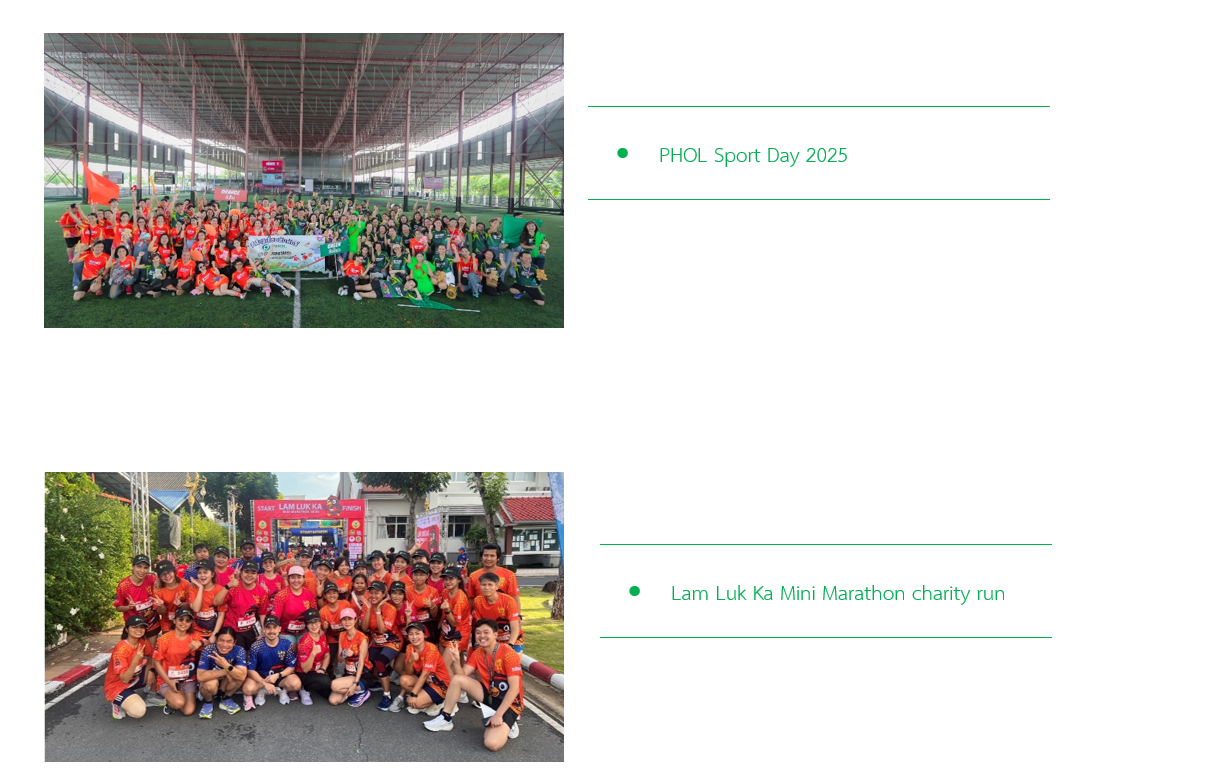
Organized activities to promote a better quality of life for employees and support the development of happy and sustainably self-reliant living, such as sports day activities to foster camaraderie between employees and management, and the Happy Body project activity: reducing blood cholesterol levels for employees with above-standard values, to promote strong physical health among employees.
Annual health check-ups for employees are provided, with health check-up programs tailored to employees' age and gender. The company facilitates this by having a hospital provide health check-up services at the company's office. In cases where employees wish to add additional check-up items beyond those specified by the company, coordination with the hospital allows employees to add these items at a special rate.
Supported employees' participation in community activities to help them relax from work and build good relationships with the community. Activities in 2025 included the Lam Luk Ka Mini Marathon charity run.
Personnel Potential Development
In 2025, the results of the Training Needs Survey were utilized in the company's annual training planning. The scope included identifying training and personnel development needs, conducting a Gap Analysis between employees' current knowledge, skills, and attitudes and organizational expectations, to ensure that work in each position achieves its objectives. Employee development training programs are categorized as follows:-
Core Competency: Essential organizational courses that everyone must know to form the foundation for leading the organization towards its defined vision.
Managerial Competency: Courses related to essential management for those in managerial roles.
Functional Competency: Courses directly related to specific job roles, which are specialized courses for those positions.
Example of an employee training courses in 2025
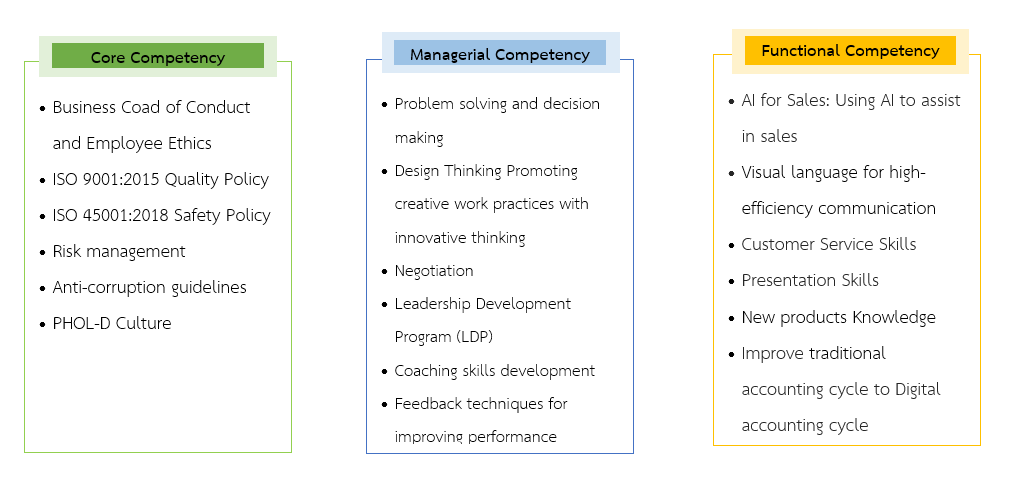
In 2025, the company organized 39 internal training courses, and 55 external and online training courses, totaling 872 training hours. A total of 185 employees out of 193 employees, representing 95.85%, received training, with an average of 4.89 courses per person per year and an average of 24.79 training hours per person per year, exceeding the target of at least 20 hours per person per year. The total budget utilized for employee training was 675,822 Baht
Employee Engagement
The company emphasizes communicating organizational goals to all levels of employees, continuously and consistently developing necessary knowledge and skills for work, and creating an appropriate work environment where employees feel proud to work with the organization. Data obtained from surveys are analyzed to define operational plans, various activities, and suitable operational improvements. The company supports two-way communication by informing employees about company policies, business directions, operational plans, clear rules and regulations, as well as organizational movements and news. Direct communication from the Chief Executive Officer in the form of a company policy statement is held twice a year to foster understanding of the company's business direction and operational goals for each year, inspire employees, and provide opportunities for employees to ask questions or make suggestions on various matters. A monthly meeting is held between the Chief Executive Officer and the group of middle managers to exchange work information, express opinions, and propose guidelines for developing and improving work systems to enhance efficiency, speed, reduce redundancy, and resolve work-related issues. Additionally, relevant news and information beneficial to operations are continuously communicated via email.
The company conducts an Employee Engagement Survey twice a year and continuously develops plans based on the survey results, as it believes that employee happiness is a crucial foundation for organizational success. The 2025 survey results showed an Overall Engagement Score of 81.25%, exceeding the target of 75%.
Compensation Management, Employee Retention, and Career Advancement
In 2025, the company studied and reviewed various policies related to career advancement paths to ensure the acquisition of adequately skilled and experienced personnel. This fosters career growth through Career Management, accompanied by providing knowledge on this matter to all employee levels. The company emphasizes continuously creating opportunities and supporting employee advancement within the organization by developing and retaining high-potential personnel at all levels to ensure a workforce with sufficient knowledge, skills, and experience. This also includes implementing a Succession Plan to prepare personnel for continuous organizational operations and to accommodate retiring employees. Successors are identified and developed appropriately, serving as a crucial tool to attract talented new generations to join the company. Furthermore, to motivate employees to perform to their full potential, all employees undergo performance evaluations twice a year, based on annual performance appraisal criteria communicated in writing to employees in advance of the evaluation.
For 2025, the company established performance evaluation criteria divided into performance assessment based on Key Performance Indicators (KPIs) according to the Balanced Scorecard principles, and assessment of behavioral responsibility in adhering to company regulations. For KPI-based assessment, success indicators are defined at the organizational, departmental, and individual levels, with appropriate weighting for each job position, serving as evaluation components to encourage employee participation in driving the organization towards its objectives and goals. Annual employee performance evaluations are used to consider salary adjustments, bonus eligibility, and annual promotions, as well as to monitor performance against set targets and provide data for employee potential development and career management, while also promoting learning and supporting employee growth.
Corporate Culture
In 2025, the company continued to emphasize fostering employee engagement through its "PHOL D" corporate culture. This ensures that all employees recognize the importance of and actively cultivate this culture as a core guideline for operations, thereby enhancing their capabilities to lead themselves, their teams, and the organization towards collective progress. It also serves as a crucial mechanism to encourage employee retention through continuous communication and public relations via email and the company's LINE groups, as well as through the monthly HR Journal. Employees are given opportunities to participate in answering questions about the corporate culture and to organize activity projects to concretely establish the corporate culture. The focus is on the participation of both management and employees through activities aligned with the "PHOL D" corporate culture to support work behaviors consistent with organizational goals and vision, and to promote positive attitudes towards collaboration, fostering cooperation across the entire organization from senior management to all levels of employees.
Additionally, the company organized the "PHOL D Ambassador" activity, providing employees with the opportunity to nominate suitable colleagues who exemplify the corporate culture in various aspects. The 2025 employee survey on corporate culture awareness showed a high awareness score of 91%, exceeding the target of 85% and an increase compared to the previous year's survey result of 87%.
Safety, Occupational Health, and Working Environment
In 2025, as the term of the previous committee expired, the company organized the election of a new Safety, Occupational Health, and Working Environment Committee. Its structure comprises the Chief Executive Officer, a management-level representative as the committee chairman, and elected representatives from supervisory and operational levels as committee members. A safety officer serves as a committee member and secretary. Additionally, workplace safety officers at the supervisory level were appointed, representing supervisors responsible for operational areas on each floor, in accordance with the Ministerial Regulation on Standards for Administration and Management of Safety, Occupational Health, and Working Environment B.E. 2549. Their roles include controlling and monitoring the company's safety, occupational health, and working environment to comply with safety policies, as well as assessing risks and defining operational plans and preventive measures for safety, occupational health, and working environment risks.
The company continuously develops and improves safety performance, monitoring operations to comply with laws and the requirements of ISO 45001:2018, to create a safe working environment, reduce the risk of accidents, illnesses, injuries, or fatalities, and ensure employees have a good and suitable quality of life, ready for work. The Safety, Occupational Health, and Working Environment Committee meets monthly to evaluate and monitor performance in line with established plans and goals. Key operations in 2025 are summarized as follows:
Work environment assessment, reviewing hazard identification and risk assessment in operational areas to identify potential dangers from the working environment, use of damaged equipment and tools, as well as measuring electrical systems, fire alarm systems, lighting, heat, and noise to ensure they are within normal limits, and providing protective equipment for employees to wear during work.
Reviewed the company's fire prevention and evacuation plan, and organized annual basic firefighting training, fire drills, and evacuation drills.
Training and basic safety knowledge provision for new employees and external contractors working in the company's office areas, and training for employees in courses related to safety and safe work practices to reduce injuries or occupational diseases, including the Safety, Occupational Health, and Working Environment Committee course, and the First Aid & CPR Basic course.
Continuous communication and dissemination of knowledge, information, and news on safety, occupational health, and well-being are provided monthly via email through ISO NEWS, prepared by the company's safety officers. This aims to make employees aware of potential risks and hazards arising from work or daily life, promote campaigns to reduce accidents, ensure various aspects of safety, provide exercises to prevent office syndrome, and offer information on epidemics, work-related diseases, and prevention methods. Furthermore, knowledge of various laws and regulations related to safety and occupational health, such as labor laws, safety laws, transportation laws, Ministry of Industry regulations, business-related laws, or new laws, is compiled into an information file at a central location for employees to study. As a result of effective safety, occupational health, and working environment management.
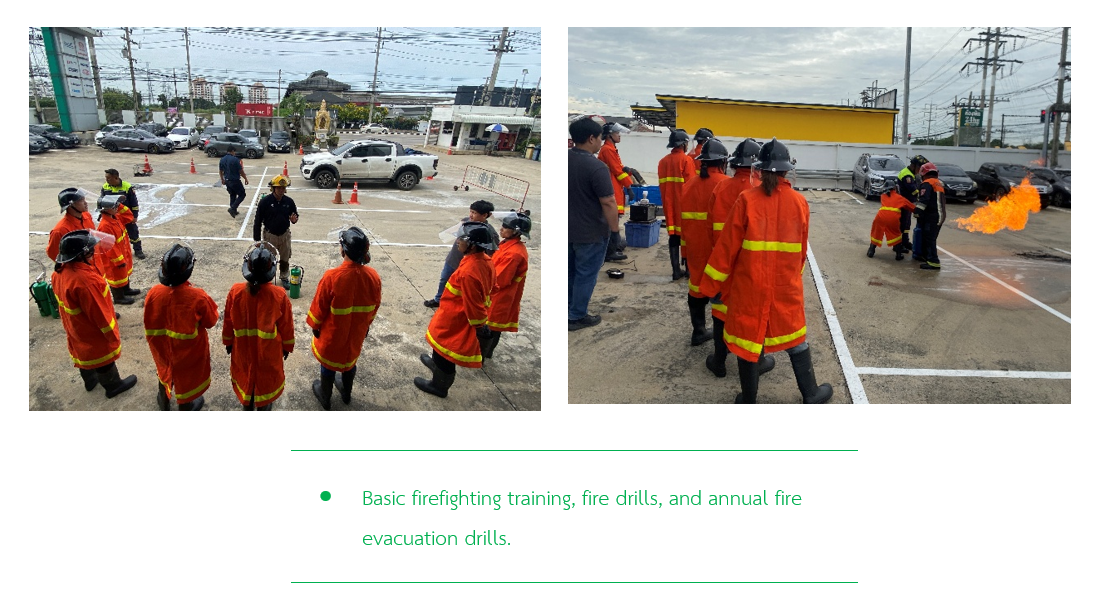
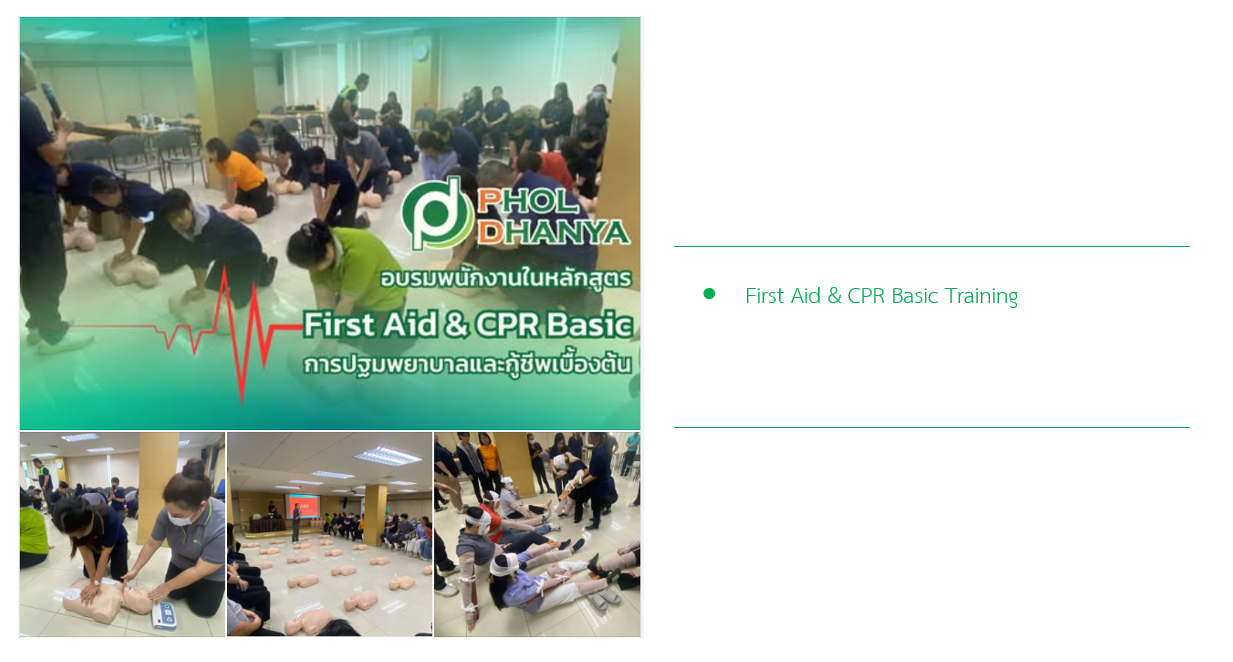
In 2025, the company reported no work-related accidents resulting in absence from work for more than 3 days, and no cases of occupational diseases among employees or contractors.
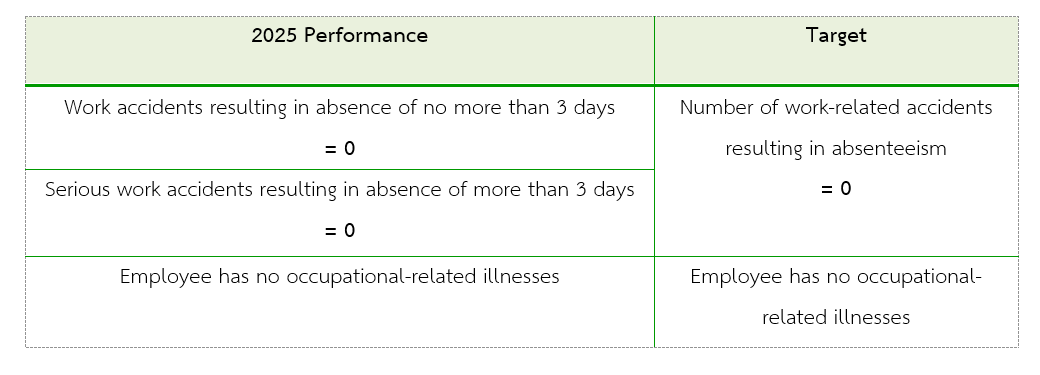
Customers — Plan & Guidelines
Has a Customer Management Plan
Yes
Plan Description
Enhancing operational efficiency
The company focuses on developing operational systems to enhance work efficiency and achieve integrated operations. This is crucial in supporting the organization to operate according to its goals and objectives, while continuously fostering business growth. The company prioritizes customers based on the principle of Customer Centricity, or conducting business with a customer-centric approach, by creating customer satisfaction through quick and efficient responses to their needs. With the increasing advancement of digital technology, customers can easily and quickly find and purchase various products. This necessitates the company to further develop its digital marketing to respond to customer needs more rapidly. The company considers the management of its supply chain to be capable of responding to the needs of customers and all stakeholder groups. It systematically manages its partners, including managing existing resources to maximize benefits for the organization and ensure efficiency. Internal operational processes are continuously improved by applying modern and secure information technology systems to manage operational processes and to ensure accurate, fast, and efficient processing for important management decisions. Furthermore, the company operates in accordance with the ISO9001:2015 international quality management system standard to assure customers that the organization's operational processes have appropriate and auditable control systems. This promotes the organization's ability to meet customer requirements effectively and supports the long-term growth of the organization.
To enable the company to cope with various potential crises, ensuring the organization can operate continuously according to its Business Continuity Plan ("BCP"), the company has adopted modern and standardized operating systems for management at both operational and control levels, as well as for monitoring performance. Key computer system programs enhance operational efficiency, such as the Warehouse Management System ("WMS"), a Dashboard system for reporting and analyzing sales and performance, and a Customer Relationship Management Program ("CRM"). Furthermore, various approval systems have been developed to be integrated into information systems to enable quick processing, reduce steps, and allow approvals from any location. This ensures speed, creates customer satisfaction, and allows for quick and easy review and monitoring of operations. Importantly, it also helps reduce paper usage in operations.
Furthermore, the company develops and adjusts its operational strategies to align with changing situations and consumer behavior, to enable customers to access safety products more conveniently and quickly. The company has expanded its channels for accessing products and services by developing its own e-commerce website, www.pholonline.com, which is a full-fledged e-commerce platform with diverse and secure payment systems. It also features a Consent Management system that complies with personal data protection laws. Additionally, products can be purchased through popular marketplaces such as Shopee, Lazada, Line MyShop, TikTok Shop, and other accessible retailers.
The company has developed communication channels to provide consultation on selecting products and safety equipment, and to offer guidance on proper usage. This includes receiving complaints and suggestions through popular online channels for convenience and quick, comprehensive responses, such as Facebook, Line Application, Website, and Email.
Plan Areas
| Plan Area |
|---|
| Responsible production and services for customers |
| Communication of product and service impacts to customers/consumers |
| Development of customer satisfaction and customer relationship |
| Protection of customer personal information |
Customers — Satisfaction Results
Customer Satisfaction Results
| Metric | Current Year | Previous Year | Two Years Ago |
|---|---|---|---|
| Evaluation results of customer satisfaction | 1 | 1 | 1 |
Customers — Targets
Has Set Customer Targets
Yes
Targets
| Indicator | Target Areas | Base Year | Base Year — Description | Target Year | Target Year — Description |
|---|---|---|---|---|---|
| Annual Customer Satisfaction Rate | 3009 · Description: Development of customer satisfaction and customer relationship | 2,023 | Annual customer satisfaction rate ≥ 98% | 2,025 | Annual customer satisfaction rate ≥ 98% |
| Percentage of products complying with international standards | 3011 · Other name: Selection of quality products for user safety · Description: Other | 2,023 | 100% | 2,025 | 100% |
Customers — Performance & Outcomes
Has Performance Results
Yes
Performance Description
Customer Operations
The company conducts its business with a strong commitment to social responsibility and all stakeholders throughout the value chain. The company prioritizes the selection and distribution of safety products that meet international safety standards. Its policy is to sell products that have obtained legally authorized safety certifications. In the event of product issues, the company offers product exchange or return services according to established criteria. The company continuously develops its personnel to ensure expertise, enabling them to provide accurate knowledge and understanding of product usage and various equipment to users, so that users can effectively and safely prevent various hazards. The company has established clear criteria and processes for evaluating manufacturers, selecting products, controlling quality, and developing various operational systems to meet customer needs, enhance customer satisfaction, and uphold customer rights in accordance with human rights principles and business ethics. Strict adherence to laws, including consumer protection laws, the Personal Data Protection Act B.E. 2562 (including amendments), and other relevant laws, is maintained.
Selection and Distribution of Safety Products
The company's core business involves the distribution of products and services related to safety, occupational health, and working environments. The products distributed by the company contribute to enhancing the safety and quality of life for individuals and communities, aligning with its vision and mission to deliver quality products that meet international standards for a safe life. The company places significant importance on the safety standards of products sold to customers, as these directly impact users' lives and health, ensuring safe usage. Therefore, product and manufacturer selection is of paramount importance. The company's policy is to distribute safety products that possess legally authorized safety standards only, such as Thai Industrial Standards (TIS), Food and Drug Administration (FDA) standards, American National Standards Institute (ANSI) safety standards, European Conformity (CE) safety standards, Japanese Industrial Standards (JIS), and other internationally and domestically recognized standards. Furthermore, products must not infringe upon intellectual property, copyrights, or patents. A satisfaction guarantee is also provided, allowing customers to return or exchange products within 7 days if they do not meet their requirements. All products intended for distribution by the company must pass various selection criteria to ensure they meet standards and are suitable for customers' working conditions. Additionally, strict quality control is maintained, with the procurement department collaborating with distributors or manufacturers to control quality and certify product safety.
Expert Recommendations
In addition to products and services that enhance safety, the company recognizes the importance of providing knowledge and understanding of the correct use of various equipment to users and interested individuals, enabling everyone to effectively and truly safely prevent various hazards. The company continuously provides training on product knowledge, standards, and usage to its sales staff, and conducts annual knowledge assessments for sales staff. This ensures that sales staff not only recommend products and services but also provide accurate advice and guidance on usage to customers.
Manufacturer Selection and Product Quality Control
The company prioritizes sustainable development throughout the supply chain and is committed to promoting these principles to its partners, who are crucial to the company's operations and an integral part of the supply chain. This collaboration aims to foster mutual growth and sustainability, extending its impact to broader social and environmental development. The company has established transparent, fair, non-discriminatory, and ethical procurement criteria and guidelines, which are disclosed in its Business Code of Conduct on the company's website: https://investor-th.pdgth.com/code_of_conduct.html.
In 2025, annual partner evaluations were conducted, and a Partner Code of Conduct was mandated for signing by all partners wishing to conduct business with the company. This ensures that partners' business operations do not conflict with the company's ethical principles, reduces risks associated with partners violating human rights or using illegal labor, and promotes business operations that consider social and environmental aspects, as well as encouraging adherence to good corporate governance principles.
In selecting partners or manufacturers, the company mandates a manufacturer evaluation process that considers human rights principles, prohibiting the use of slave labor or child labor. All new partners must strictly meet selection criteria regarding quality and safety standards, on-time delivery of goods and services, compliance with laws, business ethics, and the partner code of conduct established by the company. Existing partners are subject to regular review assessments, including factory visits. In the event of identified issues, the company will collaborate with its partners to find appropriate solutions. The company also considers partners' qualifications in terms of morality, ethics, social responsibility, and environmental practices. The company has established adequate internal control systems for product quality inspection. Consequently, it is assured that products from manufacturers selected by the company for distribution are of high quality, meet standards, and can be used safely.
Furthermore, the company has a policy to develop "Own Brand" products in collaboration with partners to enhance competitive potential. The company has visited manufacturing facilities and organized training seminars with partners and customers. The company has experienced continuous growth in "Own Brand" products, with sales of "Own Brand" products accounting for 22% of revenue from sales in 2025.
In 2025, the average customer satisfaction survey result was 99.47%, with no significant customer complaints impacting the business. The company has continuously utilized customer feedback to develop and improve its services, such as collaborating with manufacturers to develop product designs that address customer issues, and enhancing customer satisfaction by implementing technology systems for faster delivery, expanding access channels for safety products more easily and quickly, and providing more knowledge and expertise training for employees.
The company has established a communication policy to provide information to customers in compliance with consumer protection laws. Customers are fully informed about products, services, and their potential impacts. Products for sale are required to have labels, user manuals, and important details such as manufacturer, production date, expiration date, usage instructions, health effects, and customer contact channels. Advertising must comply with legal requirements, accurately reflect the characteristics and qualities of products and services, and avoid exaggeration. A control system is in place, requiring approval before any advertising communication. Furthermore, the company values all consumer feedback and opinions to continuously improve services and offer products that better meet customer needs, supporting diverse applications as part of sustainable development. Customers can contact the company through various channels, such as the website or direct email. Marketing@pdgth.com or various social media channels such as Facebook, Line, and by phone at 02 791 0111 ext. 212
The company prepares sustainability reports for dissemination to all stakeholder groups, informing them of its sustainable development approaches and operational performance across economic, social, and environmental dimensions. These reports follow the GRI Standard reporting guidelines, focusing on issues relevant to the company's business operations and of interest to stakeholders, thereby demonstrating the company's commitment to sustainable organizational growth.
The company publishes its 2025 Sustainability Report on its website. Further details can be found at www.pdgth.com
Community & Social — Plan & Guidelines
Has a Community & Social Plan
Yes
Plan Description
With its experience and expertise in safety and occupational health, the company believes that safety is a crucial foundation that not only protects lives from work and daily activities but also serves as a vital mechanism for driving the sustainability of businesses and society. Therefore, the company participates in developing communities and society to become a safe and healthy environment. This is achieved by establishing an operational plan to disseminate relevant knowledge to raise awareness about safety and to promote the use of various safety equipment.
Plan Areas
| Plan Area | Other — Please Specify |
|---|---|
| Others | Safety Knowledge Management and Sharing |
Community & Social — Targets
Has Set Community & Social Targets
Yes
Targets
| Indicator | Target Areas | Base Year | Base Year — Description | Target Year | Target Year — Description |
|---|---|---|---|---|---|
| Number of visitors and article readers via thai-safetywiki.com | 3045 · Other name: Enhance societal safety · Description: Others | 2,023 | More than 500,000 cases | 2,025 | More than 550,000 cases |
Community & Social — Performance & Outcomes
Has Performance Results
Yes
Performance Description
Operations for Creating Value for Society
Safety Knowledge Management and Sharing: Thai-Safety Wiki
The company has developed the thai-safetywiki website as a public repository and dissemination platform for information. This website publishes articles providing knowledge on safety and health, relevant safety laws and standards, methods for using personal protective equipment and safety devices in workplaces, various safety technologies, as well as general health and hygiene knowledge for daily life. This initiative aims to promote easy and reliable access to safety and occupational health information for establishments, industrial workers, users, consumers, or interested individuals, benefiting both their work and daily lives. In addition to communicating through articles on the website, In 2025, the company expanded its communication channels for information dissemination through popular online applications such as Facebook and TikTok, which have a high user base. The company created educational content in the form of easy-to-understand video clips or images, increasing opportunities for communities and society to access information and raise awareness of good safety and hygiene practices. Furthermore, the company has produced articles and other forms of educational media, published through the thai-safetywiki website and various other online communication channels of the company, accumulating a total of 574,000 views, exceeding the set target of 550,000 views.
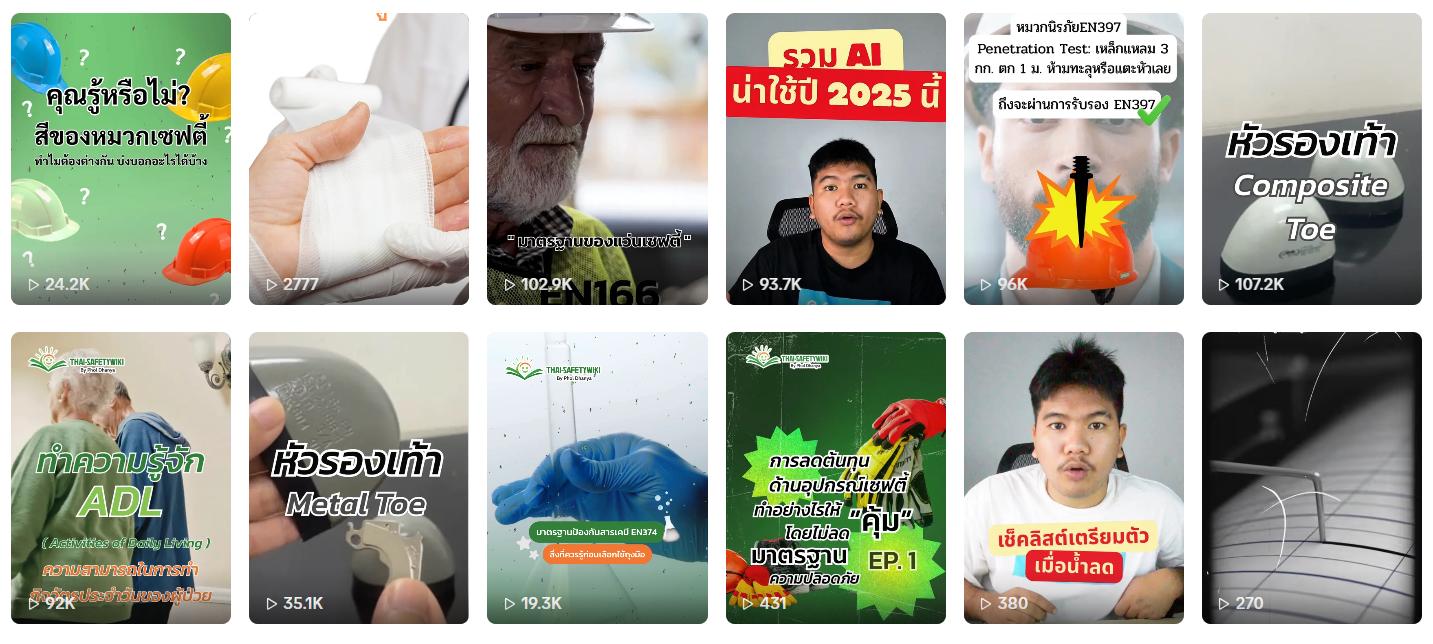
Organizing Training Seminars to Provide Knowledge to External Parties
The company organizes training sessions and seminars to provide knowledge on courses related to occupational safety and the proper use of safety equipment for operations. The focus is on educating students in engineering departments or departments related to occupational health and safety, individuals who will serve as safety officers, overseeing the health and safety of employees in industrial factories, and vocational students who will work in the industrial sector. These individuals require knowledge and understanding of occupational health and safety for their work, in order to support human resource development in the industrial sector and instill safety awareness.
Supporting Safety Equipment for Communities and Society
In addition to imparting knowledge on safety and occupational health, the company also encourages communities and society to recognize the importance of creating safety by emphasizing the wearing of protective equipment and the use of essential, standardized safety devices that are correctly and appropriately applied for various work and daily life situations. The company supports and donates personal protective equipment and safety and health devices to universities and educational institutions to serve as teaching aids and for practical training for students, as well as to various organizations that assist the public and provide public services to society, and which require sufficient and continuous safety equipment for their personnel, such as government agencies, hospitals, and rescue units.
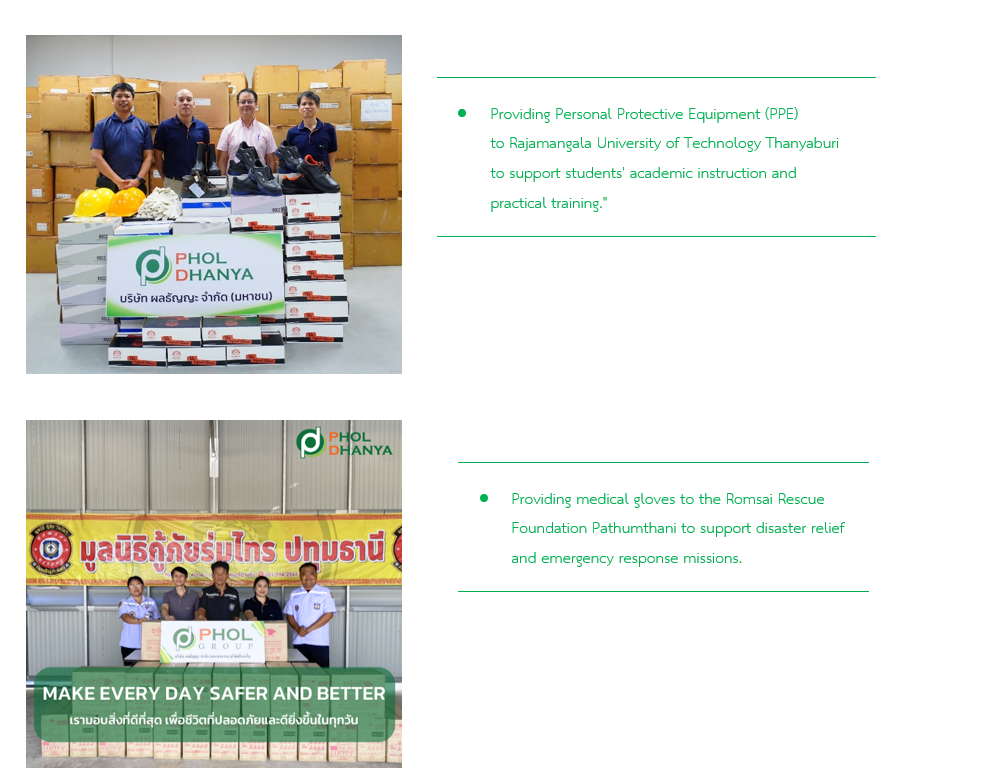
Furthermore, in 2025, amidst the unrest along the Thai-Cambodian border and the earthquake and flooding disasters in Southern Thailand, the company contributed essential health and safety equipment. This support was directed toward medical personnel, relevant frontline officials, and affected individuals to facilitate emergency operations and relief efforts.
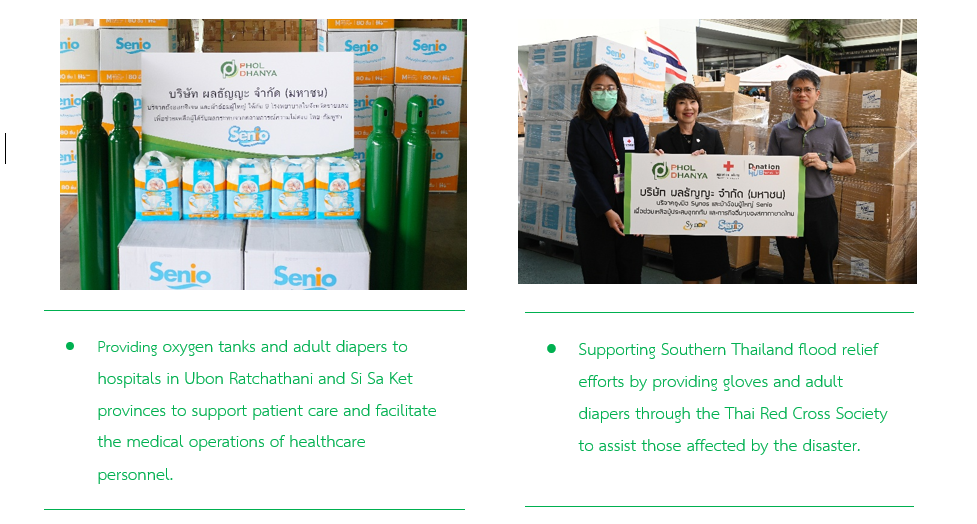
Other Social Management
Plan & Outcomes — Description
-
Law Violation Incidents
Law Violation Incidents
| Metric | Current Year | Previous Year | Two Years Ago |
|---|---|---|---|
| The total number of cases or incidents of significant violations of laws or regulations regarding social and human rights (Cases) | 0 | 0 | 0 |
| The total number of cases or incidents that cause significant labor disputes (Cases) | 0 | 0 | 0 |
| The total number of cases or complaints related to consumer rights violations (Cases) | 0 | 0 | 0 |
| The total number of cases or complaints related to partner rights violations (Cases) | 0 | 0 | 0 |
| The total number of cases or incidents that cause disputes with the community/society (Cases) | 0 | 0 | 0 |
| The total number of cases or incidents related to cyber security or customer data breaches (Cases) | 0 | 0 | 0 |
| The total number of cases or incidents related to safety and occupational health at work (Cases) | 0 | 0 | 0 |